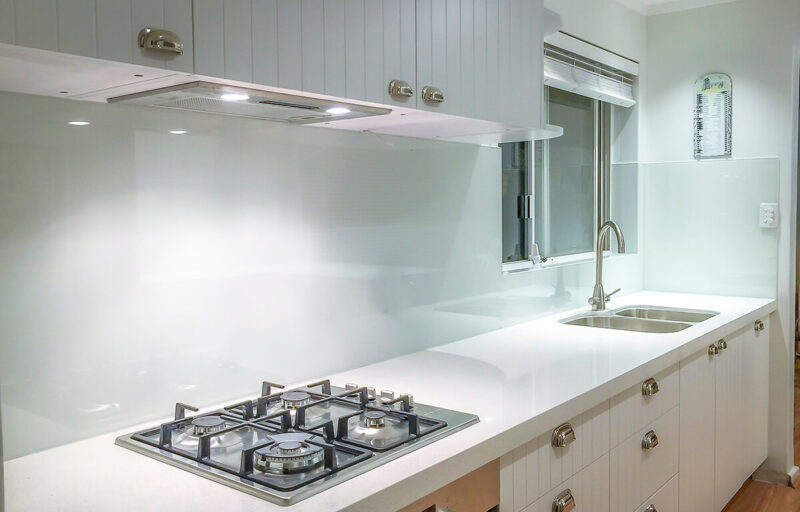
Installing a glass splashback is a great way to upgrade your kitchen with a modern and practical feature. While the result looks sleek and professional, the installation process requires careful preparation and attention to detail. Since glass panels cannot be adjusted once manufactured, proper handling and correct placement are essential for a successful outcome.
Preparing the Area for Glass Splashbacks Installation

Before installing glass splashbacks, it is important to ensure that the wall surface is clean, dry, and completely smooth. Any dust, grease, or uneven areas can affect how well the glass adheres to the wall. Use a suitable cleaner to remove any residue and allow the surface to dry fully before starting the installation.
It is also important to check that all measurements are accurate and that the splashback fits the intended space. Test fitting the panel without adhesive can help confirm alignment, especially around sockets, switches, and appliances.
Make sure you have all the necessary tools ready, including adhesive suitable for glass, a spirit level, spacers, and protective gloves. Preparing everything in advance will make the process smoother and reduce the risk of mistakes.
Step by Step Installation Process

Begin by applying a high quality adhesive to the back of the glass panel. This is usually done in evenly spaced vertical or circular lines to ensure strong and consistent bonding. Avoid applying adhesive too close to the edges to prevent it from spreading out when the panel is pressed against the wall.
Carefully position the glass splashback onto the wall, starting from one edge and gently pressing it into place. Use a spirit level to ensure that the panel is perfectly straight. Small adjustments should be made immediately, as the adhesive will begin to set.
Spacers can be used along the edges to maintain even gaps and allow room for sealing. Once the panel is correctly positioned, apply gentle, even pressure across the surface to secure it firmly in place.
Finishing Touches and Safety Tips
After the splashback is installed, allow the adhesive to cure according to the manufacturer instructions. This step is crucial for ensuring a strong and lasting bond. Avoid using the area during this time to prevent movement or damage.
Once the adhesive has set, apply a clear silicone sealant around the edges. This helps protect against moisture and creates a clean, finished look. Smooth the sealant carefully for a neat appearance.
Always handle glass panels with care during installation. Wearing protective gloves and working with another person can reduce the risk of accidents. Toughened glass is durable, but proper handling is still essential to avoid damage.
Final Thoughts
Installing a glass splashback can transform your kitchen, but it requires precision and patience. By preparing the surface properly, following the correct installation steps, and taking necessary safety precautions, you can achieve a professional looking result. With the right approach, your splashback will not only enhance the design of your kitchen but also provide long lasting protection and ease of maintenance.