
Ask someone on Seeking whether they’re an escort and you’ll get an answer somewhere between offended and rehearsed. Ask an escort whether she’s basically an unpaid sugar baby and she’ll probably laugh at you.
Both reactions make sense from the inside. From the outside, in front of a judge or a prosecutor, the line between the two is thinner than either side wants to admit, and it’s drawn in a place almost nobody looks: not in how the relationship feels, but in whether money was exchanged for a specific sex act or for something a little vaguer, like “time,” “companionship,” or a monthly “allowance.”
That single distinction is doing an enormous amount of work in 2026. It’s why sugar dating platforms can operate openly on the App Store while a straightforward escort ad gets pulled. It’s also, I’d argue, why sugar dating leaves a meaningful share of the people in it with fewer protections than the industry it insists it has nothing to do with.

Two products that are marketed as opposites
Traditional escorting is, structurally, a service business. A client books a set amount of time, agrees on a fee in advance, and both parties understand what the money is for, even when the language around it stays euphemistic. It’s transactional by design, and in places where it’s regulated, that transaction is the entire point of the paperwork.
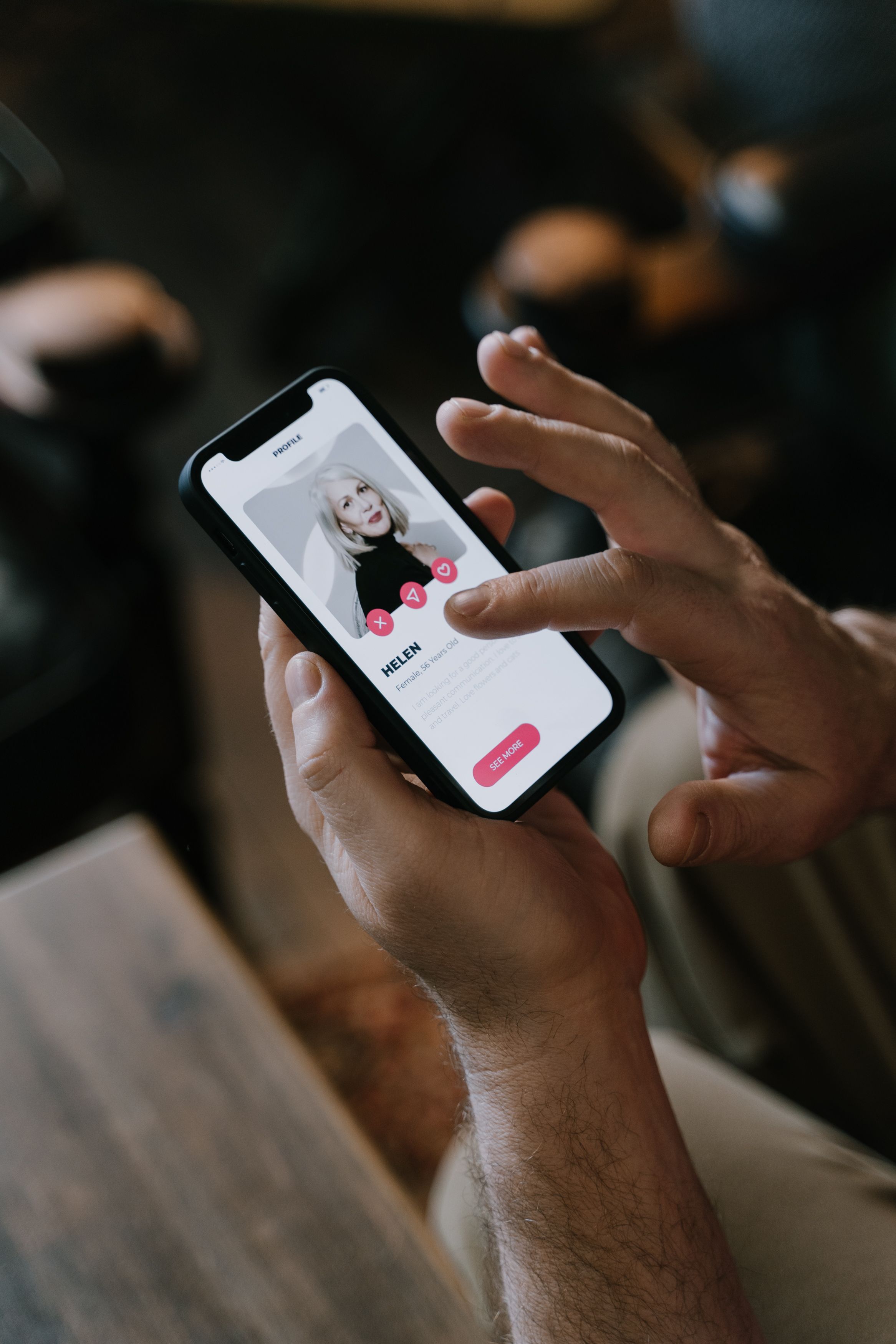
Sugar dating was built to look like the opposite of that. Seeking, the largest platform in the space, still frames itself around “mutually beneficial relationships” rather than bookings, and its user base has barely shifted despite a 2026 rebrand toward “luxury dating” language.
Behind the marketing, though, the mechanics are the same two-sided market they always were: profiles skew toward men in their 30s and 40s labeled “Successful” and mostly younger women labeled “Attractive,” and the entire pitch to the second group is financial relief in exchange for company.
2022 discourse analysis out of Nottingham Trent University, based on interviews with UK sugar babies, found the site describes an ideal Sugar Baby as “college educated or college-bound” who might “worry a little less about her tuition bills” thanks to a benefactor – a pitch aimed squarely at financial need while insisting the relationship isn’t transactional at all.
What actually differs on paper
Once you strip away the branding, the comparison holds up better as a table than as an argument, because the real differences are procedural, not moral.
| Dimension | Sugar dating (platform arrangement) | Licensed escorting (Germany model) |
|---|---|---|
| Legal status | Gray area almost everywhere; becomes prostitution the moment payment is tied explicitly to a sex act | A legal profession since the 2002 Prostitution Act, with agencies requiring an official permit under the 2017 Prostitute Protection Act |
| Registration | None – anonymous platform profile, no ID check tied to the arrangement itself | Workers must register in person and complete mandatory health counseling before starting |
| Who sets the price | Usually framed as an “allowance” or gift, negotiated informally, rarely itemized | Fee negotiated directly by the worker under §26 of the Prostitute Protection Act; operators are barred from dictating terms |
| Platform/agency accountability | Sites must screen for prostitution-coded language under the US FOSTA-SESTA law (2018) to avoid liability | Licensed premises are subject to unannounced police walk-throughs |
| Tax treatment | Gifts and allowances routinely go unreported | Registered as a taxable occupation, with earnings subject to standard tax liability |
Sources: German Federal Ministry-published Prostitute Protection Act text (ProstSchG, in force since 1 July 2017), FOSTA-SESTA (2018), Nottingham Trent University thesis on Seeking.com discourse (2022). Figures current as of August 2026.
Where the law actually draws the line
In the US, there’s no single federal prostitution statute – each state defines it, but nearly all of them converge on the same test: an explicit or implied agreement that a sexual act happens in exchange for payment. Courts don’t care what you call the payment.
A California defense attorney’s breakdown of Penal Code §647(b) makes the point bluntly: financial support alone doesn’t make a relationship illegal, but if there’s evidence the money was contingent on sex – a text message, a pattern of payments tied to visits – prosecutors can and do treat it as solicitation.
Escorting sits on the same knife-edge: legal as a paid-companionship service, illegal the instant sex becomes part of the deal, regardless of the label on the ad.
Germany takes a different approach entirely, and it’s worth understanding because it shows what happens when a country stops pretending the transaction isn’t a transaction. Since 2002, consensual sex work has been a legal occupation.
The 2017 Prostitute Protection Act went further, requiring registration, health counseling, and permits for anyone operating a “Prostitutionsgewerbe” – a category that explicitly includes escort agencies (Escort is named directly in the law’s own list of covered services, alongside brothels and erotic massage).
A well-run escort service München operates inside that framework: registered, taxed, and subject to the same condom and safety rules as any other licensed provider. Sugar dating has no equivalent anywhere.
There is no registration body for “sugar baby,” no mandatory health counseling, no license to revoke if someone behaves badly. The informality that makes sugar dating feel like dating is also the thing that strips away every protection the German system was built to guarantee.
Who’s actually doing this, and why
The popular image is a wealthy 60-something and a broke 19-year-old. The real numbers are messier. A rep for Seeking told InsideHook the average sugar daddy on the platform is 42, and the site reportedly has more benefactors in their 20s and 30s than in their 40s – this is closer to a generational dating-style preference than an age-gap fetish for a lot of users.
On the sugar baby side, a 2026 study published on PubMed surveyed 1,582 undergraduates at a US private university and found a 5.2% prevalence of sugar dating, with participants two to five times more likely to report childhood trauma on a standard 10-item adverse-experiences questionnaire, alongside higher rates of financial aid dependence and substance use.
That’s not a portrait of universal empowerment, and it’s not a portrait of universal exploitation either – it’s a population with more vulnerability markers than average, which is a very different claim.
Where it gets genuinely interesting is a 2024 study in The Journal of Sex Research, which surveyed 45 sugar babies and 32 benefactors in the US and Canada.
The finding that should complicate anyone’s easy take: sugar babies and benefactors reported roughly equal perceived power in the relationship, both groups emphasized companionship over sex, and the researchers concluded the dynamic looks meaningfully different from traditional sex work, at least from the inside.
That’s a real, published, peer-reviewed counterweight to the exploitation narrative, and it deserves to be taken seriously rather than waved off.
My actual read on this
I think both of those studies can be true at once, and that’s the uncomfortable part. Sugar dating genuinely does produce relationships where both people report feeling equal, valued, and in control – the Journal of Sex Research sample says so, and I don’t think that’s fabricated or naive.
But the same industry’s own marketing (fee-waived accounts for anyone with a .edu email, “tuition relief” messaging aimed at students already carrying debt) is deliberately built to recruit from the exact population the undergraduate study found over-represented: people with fewer options and more vulnerability, not fewer.
Where I land: sugar dating isn’t secretly identical to escorting, but it isn’t a clean escape from it either. What it actually is, is escorting’s less-regulated cousin – the version that gets to keep the risk of the underlying transaction while shedding every protection the regulated version was forced to build after decades of harm.
If you’re going to trade companionship for money, a licensed, taxed, registered arrangement with mandatory health checks is not the more exploitative option. It’s the one that got audited.

The safety gap nobody puts on the landing page
Here’s a genuine dilemma worth sitting with: would you rather meet someone through a platform with zero vetting requirements but total privacy, or through a registered, inspected system that keeps a paper trail with your name on it?
Most sugar daters pick the first option without hesitating, and I understand why – the paper trail is exactly what they’re trying to avoid. But that paper trail is also the thing that gets someone help if a meeting goes wrong.
Licensed escort agencies in regulated markets are required to maintain the conditions for client and worker safety under §3 of the German act; a platform “arrangement” has no equivalent obligation to anyone, because legally, it isn’t one.
The 2018 US FOSTA-SESTA law made platforms liable for hosting anything a court could later call prostitution facilitation, which is exactly why sites like Seeking now moderate language around “allowances” and “lifestyle support” so carefully. That moderation isn’t there to protect users. It’s there to protect the platform’s legal exposure, and the two goals only overlap by accident.

Quick answers to what people actually ask
Is sugar dating just prostitution with better branding? Not legally, and not always in practice. The law in most jurisdictions only treats it as prostitution if there’s a demonstrable agreement tying payment to a specific sexual act.
A relationship built around gifts, companionship, and a general pattern of financial generosity, without that explicit condition, generally falls outside the statute – which is exactly the gray area the whole industry is built inside.
Is sugar dating legal in Germany? The dating arrangement itself isn’t regulated at all, because it isn’t classified as sex work unless money is explicitly tied to a sexual service.
Once it crosses that line, it falls under the same Prostitute Protection Act that governs any other paid sexual service in the country, registration and all.
Do sugar babies have any legal protections comparable to licensed escorts? Essentially none. There’s no registration body, no mandatory health counseling, and no licensing authority a sugar baby can appeal to if an arrangement turns unsafe or a payment doesn’t materialize – it’s treated as a private contractual dispute, if it’s treated as anything at all.
How this article was put together: Claims about platform demographics and pricing come from Seeking-focused reviews and a 2022 academic thesis analyzing Seeking.com’s own site content; prevalence and risk-factor data come from a 2026 PubMed-indexed undergraduate survey and a 2024 Journal of Sex Research study; legal claims are drawn directly from Germany’s published Prostitute Protection Act text and US state-level legal explainers, checked in August 2026. Figures on user counts self-reported by platforms could not be independently verified and are flagged as such in the text.